
2D to 3D Video Conversion: The Ultimate Guide to Transforming Flat Video into Immersive 3D (2026)

Updated: May 1
Why Consider 2D to 3D Conversion

The demand for 2D to 3D video conversion has untapped potential as immersive 3D content for Theatrical release, as well as for AR Glasses and VR Headsets as that market continues to develop. Whilst rudimentary AI based autoconversion continues to improve, a generic one-size-fits-all for every shot in a feature film, not only misses the point of how 3D can be utilised as a tool for enhanced viewer engagement across the running time but produces footage with a wide range of possible conversion errors.
Whether you’re a filmmaker, video editor, content creator, marketer, or archive restoration specialist, converting standard footage into stereoscopic depth can unlock a completely new viewing experience.
In this guide, you’ll learn exactly what 2D to 3D conversion is, how it works, why it matters, and what technology is driving the future of immersive video.

What Is 2D to 3D Video Conversion?

2D to 3D video conversion is the process of taking a standard flat video and transforming it into a stereoscopic 3D video that creates the illusion of depth.
Instead of viewing a single flat image, the brain interprets two slightly different viewpoints (one for each eye), creating a realistic sense of:
foreground and background separation
object depth & relative distance
object & spatial volume
immersive spatial realism
This is how real-world human vision works, and high-quality 3D conversion aims to replicate that effect as naturally as possible.
Why Convert 2D Video to 3D?

1. Increased Viewer Engagement
3D content naturally holds attention longer because it feels more immersive. This is why 3D is widely used in cinema, VR, and high-impact promotional content.
2. Stronger Visual Storytelling
Depth adds a new storytelling tool. Directors and creators can guide the viewer’s eye using distance, perspective, and spatial staging.
3. Future-Proof Content for Theatrical and Home Platforms
Although 3D Tv's are no longer produced thus limiting the home market, many other platforms now support 3D playback, including:
Cinema
Visitor Attractions/Art Galleries/Museums
VR headsets
AR Glasses
3D capable projectors
3D capable displays
4. Maximise value by Repurposing Classic Footage
Old films, documentaries, concerts, and archive material can be brought back to life by converting them into a modern immersive format.
The market for classic films receiving a 3D conversion for major anniversaries has been a lucrative area in the theatrical market with films ranging from "Jaws" through to the forthcoming "Pan's Labyrinth" getting the 3D treatment for events and short promotional runs.
How Does 2D to 3D Video Conversion Work?

Eyepop-3D’s conversion process follows a structured four-stage workflow designed to balance efficiency with high-end visual quality.
Here’s how the process typically works:

Step 1: AI Depth Map Creation
First, depth maps are generated for every shot using contemporary AI depth estimation models. These maps define the relative distance of objects within the frame and form the foundation of the stereoscopic effect.
Modern depth estimation models analyse:
lighting cues
object edges
motion and parallax
known object shapes
This stage establishes the baseline for the 3D conversion pipeline.
Step 2: Manual Depth Map Refinement
Next, the depth maps are meticulously refined using traditional digital video fx tools and methods such as color grading and rotoscoping.
Inconsistencies and artefacts are corrected, and depth sculpting techniques are applied to enhance spatial composition and ensure engaging and comfortable viewing.
Step 3: Manually Create the Stereoscopic View
The third stage is the core conversion process, where pixel offset techniques are applied on a shot-by-shot basis. Parameters are continuously adjusted to account for movement, composition, and scale, resulting in a consistent and natural-looking 3D image with minimal artefacts. This step is critical in avoiding the “cardboard cutout” effect.
Once depth is established, software such as Adobe After Effects or Davinci Resolve are used to generate a new perspective by shifting pixels to simulate a second camera viewpoint. While depth maps provide the starting point, they require further refinement to achieve optimal results.
This process produces the left-eye and right-eye image pair: the foundation of stereoscopic 3D.
Step 4: Manually Fix visible flaws and inpainting
Finally, any remaining visual anomalies are addressed using traditional manual techniques such as rotoscoping and inpainting.
This clean-up stage ensures the finished result meets professional standards and delivers a polished, immersive 3D experience.
For example, when pixels are shifted, gaps or distortions can appear behind and around objects. These areas are reconstructed using a combination of techniques to replicate surrounding texture and detail, ensuring a seamless final image.
As this process demonstrates, these are not purely “AI conversions.” Rather, they are traditional, hand-crafted conversions in which AI serves a supporting role: primarily accelerating the initial depth map creation stage while the critical creative and technical work remains firmly manual.
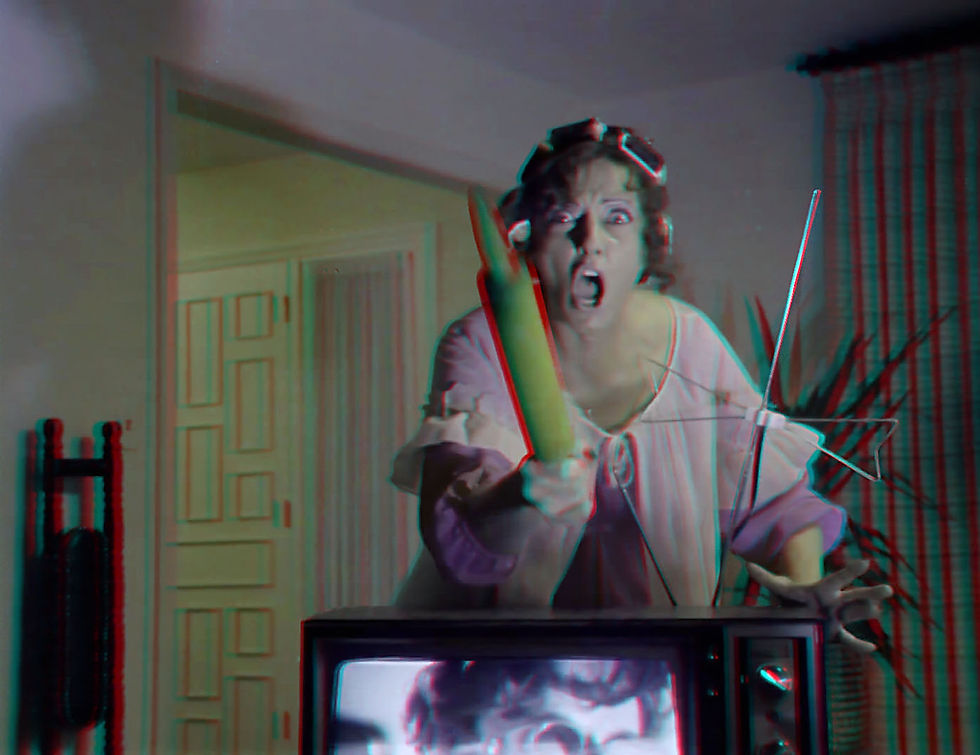
CASE STUDY: House on Haunted Hill
Grab your 3-D spex, a bucket of popcorn and join us as Alex takes you through the 2d to 3d conversion of "House on Haunted Hill...in depth"
House on Haunted Hill 3D is available on 3D Blu-ray from the Plan-D Online Store.
AI vs Manual 2D to 3D Conversion: What’s the Difference?

AI technology is revolutionising the industry, but fully automated conversion still has major limitations limiting it's use in commercial environments.
AI Conversion Strengths
fast processing
scalable for large projects
strong depth prediction in simple scenes
cost effective
Manual Conversion Strengths
accurate depth placement
refined edge detail (hair, smoke, glass)
artistic depth grading
reduced eye strain and artifacts
The optimal conversion process typically combines AI depth generation with human refinement for high-end results.
Where Is 2D to 3D Video Conversion Used?
2D to 3D conversion is now used across multiple industries.
Film and Entertainment

Many films, from small indies to huge blockbusters and remastered classics use post-production 3D conversion to create theatrical and home cinema releases.
Museums & Heritage Exhibitions

Historic archive footage, documentaries, and restoration projects can be converted into 3D to enhance educational impact. When visitors see historical scenes in depth, it creates a stronger emotional connection and makes exhibits feel more “present” rather than distant.
Visitor Attractions, Art Galleries & Digital Installations

Modern galleries and Digital Installations often feature projection-based exhibitions and immersive digital rooms. Converting 2D visuals into 3D allows curators to create layered depth experiences, turning flat artwork, photography, or film into a more dynamic multi-dimensional installation.
Events, Pop-Ups & Experiential Marketing

From themed pop-up attractions to branded immersive experiences, 3D conversion helps organisers create premium visual content for:
immersive projection shows
large-scale LED wall presentations
VR event booths
themed attraction screenings
For visitor attractions, 3D isn’t just entertainment — it’s a tool for creating stronger audience engagement, longer dwell time, and a more unforgettable experience.
VR and Immersive Media

VR experiences require depth to feel convincing. 3D converted footage is increasingly used for:
VR documentaries
concerts
travel experiences
educational content
Gaming and Simulation

3D conversion is also used in simulation and training environments, helping create more realistic immersion.
Marketing and Product Advertising

Brands use 3D content to create standout visuals for:
product launches
promotional videos
immersive social media ads
Common Challenges in 2D to 3D Conversion

Even with contemporary tools, converting 2D footage into 3D isn’t always straightforward.
1. Complex Motion Scenes
Fast movement, shaky camera footage, or heavy motion blur can reduce depth accuracy.
2. Transparent Objects
Glass, smoke, reflections, and water are notoriously difficult for depth prediction algorithms.
3. Edge Artifacts
Hair, fur, thin objects, and fine detail can produce stereo edge errors if not corrected manually.
4. Viewer Comfort
If depth is too extreme or inconsistent, it can cause:
eye strain
headaches
nausea
“miniature effect” visuals
Commercial quality conversions aim to manage depth carefully to ensure comfortable viewing.
Best Practices for High-Quality 2D to 3D Video Conversion

3D in film should be considered in much the same way the same way as color grading, it should extend, not disrupt the narrative, enhancing the viewer's experience and response to the film.
For conversion results that work across the board in 3D, some suggested best practices are:
Use Proper Depth Grading
Depth should be intentional and cinematic, not exaggerated or uncomfortable. Hyperstereo or hypostereo can be used to great effect but this should be in a considered way not simply pushing to maximise 3D strength.
Objects should have volume and environments should have natural feeling space: faces should have a natural roundness and walls should appear flat. A broom cupboard should feel claustrophobic and a castle should feel vast.
Simply maximising 3D beyond its natural appearance creates unnatural elongated volume and excessively large spaces - often with other problematic visual artefacts.
Avoid Over-Popping Objects
Too many extreme “pop-out” effects can look unnatural and can cause discomfort.
Whilst these "pop-out" shots can be fun they can take the viewer out of the narrative flow of the story so should be used sparingly and for dramatic or comedic effect.
Correct Stereo Window Violations
When objects break the edge of frame incorrectly, the 3D illusion collapses. This must be fixed in post-production.
Prioritise Natural Depth
The best conversions are subtle and realistic, mimicking how native stereoscopic cameras capture depth and how our eyes and brain perceive 3D.
What Software Is Used for 2D to 3D Conversion?

There are many tools used for conversion depending on quality needs.
Professional pipelines may include:
AI depth estimation tools
rotoscoping and masking software
depth compositing workflows
stereo alignment tools
manual paint and inpainting
Typical Professional Software for 2D to 3D conversions includes:
The Foundry Nuke
Davinci Resolve
Adobe AFter Effects
The key difference between amateur and professional results is the amount of depth artistry and cleanup work.
Future Trends: The Next Generation of 2D to 3D Technology

The future of stereoscopic conversion is moving rapidly toward:
Single Viewer VR & AR Glasses for 3D Display
VR Headsets and AR Glasses are expanding in the marketplace. These devices naturally present 3D as they provide dual display technology.
Glasses-Free "Holographic" 3D Displays
Autostereoscopic and light-field displays are growing, meaning more people will consume 3D without needing glasses.
AI That Understands Full 3D Space
Depth estimation models are improving quickly, and future systems may eventually generate accurate volumetric environments from 2D footage.
Is 2D to 3D Conversion Worth It?
Yes — if the conversion is done properly.
When performed with modern tools and expert depth grading, 2D to 3D conversion can deliver results that rival native 3D cinematography, especially for classic films, archive material, concerts, and immersive digital content.
3D is no longer a gimmick — it’s becoming a premium visual format again.
Frequently Asked Questions (FAQ)
What is 2D to 3D video conversion?
2D to 3D conversion is the process of adding depth to flat video footage to create stereoscopic 3D, producing separate left and right eye views.
Is AI 2D to 3D conversion good enough?
AI conversion is improving fast, but high-quality professional results usually require manual cleanup and depth grading.
Can any 2D video be converted to 3D?
Most footage can be converted, but complex motion, smoke, reflections, and heavy blur can make conversion harder.
Does 2D to 3D conversion reduce video quality?
If done poorly, yes. If done professionally, conversion can preserve or even enhance the viewing experience without visible degradation.
What’s the difference between native 3D and converted 3D?
Native 3D is shot with two cameras (or a stereoscopic rig). Converted 3D simulates the second viewpoint using depth maps and compositing.
Final Thoughts: The Future of 3D Video Is Here
With the rise of immersive platforms, VR devices, and high-resolution display technology, converting 2D video to 3D is becoming more valuable than ever.
Whether you’re modernising archival footage or creating content for the next generation of immersive viewers, 2D to 3D conversion is one of the most exciting tools in modern video production.
If you want to stand out, depth is the future.

EYEPOP-3D specializes in high-quality 2D-to-3D stereoscopic conversions for classic films, music videos, and new productions. Using a meticulous shot-by-shot workflow that can require hundreds of hours of work per feature, the studio focuses on preserving the integrity of the original cinematography while adding natural and immersive depth. Their work has brought new life to a wide range of films spanning early cinema, cult classics, and modern genre productions, with many releases available on 3D Blu-ray.
If you are interested in discussing a possible conversion project please get in touch.


Comments