
Can Cost-Effective 2D-to-3D Conversion Boost the theatrical Success of a Low-Budget Film?


Modern cinema audiences are increasingly seeking out experiences they can’t easily duplicate at home, driving renewed interest in premium formats like Imax, 3D and 4DX. While home entertainment systems continue to improve, they still can’t match the immersive depth of well-crafted 3D or the sensory impact of 4DX’s motion seats, atmospheric effects, and environmental cues.
These formats transform a film into a full-scale event, offering viewers a level of excitement and presence that streaming simply can’t provide. With audiences clearly responding to these premium, theatrical-only experiences, it’s worth asking: why shouldn’t indie filmmakers consider 3D as a powerful way to boost their film’s impact in cinemas?
Why Consider 2D to 3D Conversion for Low-Budget Features
1. Accessing Premium Revenue Streams

Converting a 2D feature into 3D allows filmmakers to tap into higher box office revenues. 3D tickets often command a premium price. According to analysis of 3D economics, 3D showings can generate more income per ticket than 2D. Number Analytics+1
For a low-budget film, converting to 3D doesn’t just add a creative “wow” factor — it can be a strategic financial lever.
2. Lower Conversion Costs than You Might Think

Contrary to the perception that 3D is prohibitively expensive, conversion costs have come down significantly in recent years.
According to FirstLook-3D (by Legend 3D), standard 2D to 3D dimensionalization historically costs between US$20,000–50,000 per minute, depending on quality. Summit Media Design, LLC
A modern hybrid approach to conversion as deployed by EYEPOP-3D slashes these costs whilst retaining excellent quality standards.
These developments mean that even indie producers with modest budgets can allocate a portion of their financing toward 3D conversion and still achieve a return on investment.
3. Quality vs. Cost: Striking the Right Balance

It’s not always necessary to go for “Hollywood-grade” 3D. By choosing the right quality tier, filmmakers can control costs without sacrificing too much on visual quality.
EYEPOP-3D can provide multiple quality tiers with associated rates for conversion — from a basic level delivering a milder 3D effect to a premium tier aiming to attain close to Hollywood standards for a fraction of the cost. This allows filmmakers to align cost with the expected theatrical scale.
4. Strategic Marketing & Branding Benefits

Having a 3D version allows a film to differentiate itself in crowded markets. For low-budget films, this can be a significant advantage:
The “3D” label can generate extra buzz, particularly among audiences who enjoy premium cinema experiences.
It opens up marketing spin: you can promote limited 3D screenings, special 3D premieres, or bundle 3D tickets with merchandise or digital extras.
Beyond theatrical profits, 3D films offer a strong competitive advantage in the expanding home entertainment market with 3D centric devices like Apple Vision Pro.
Risks & Challenges to Be Aware Of

Quality risk: Poor quality or rushed 3D conversions produced by teams inexperienced with stereoscopic 3D can lead to a subpar 3D experience, which may alienate audiences. Fully automated conversions are even worse and not suitable for commercial projects.
Upfront investment: Even lowered conversion costs may still represent a significant portion of a low-budget film’s total costs. Producers must model whether the expected lift in box office (or other revenue) justifies the spend.
Distribution risk: Not all theaters will support 3D, and not all markets are equally receptive — it's critical to assess whether your release geography will support enough 3D screens to make the conversion worthwhile.
Post-production time: Conversion takes time. Depending on the workflow, it could add weeks or months to post-production, which may affect release schedules.
Case Study: Large-Scale Example (Titanic) — And Lessons for Indies

The 1997 film Titanic was re-released in 2012 after being remastered in 4K and converted to 3D, at a cost of about US$18 million. Wikipedia
The result: its 3D reissue grossed US$343 million worldwide, making it one of the highest-grossing re-released films. Wikipedia
Lesson for low-budget films: if a big-budget classic can justify conversion at scale, a leaner version could be justified for modern indie films — especially if smart about cost control.
Strategic Recommendations for Low-Budget Filmmakers

Budget for Conversion Early
Factor 2D-to-3D conversion into your budget at an early stage. Even if you don’t commit immediately, having it in the financial model helps you evaluate ROI.
Shop Around for Conversion Providers
Compare different providers and get quotes based on your runtime, complexity, and quality goals.
Pilot a Short Test
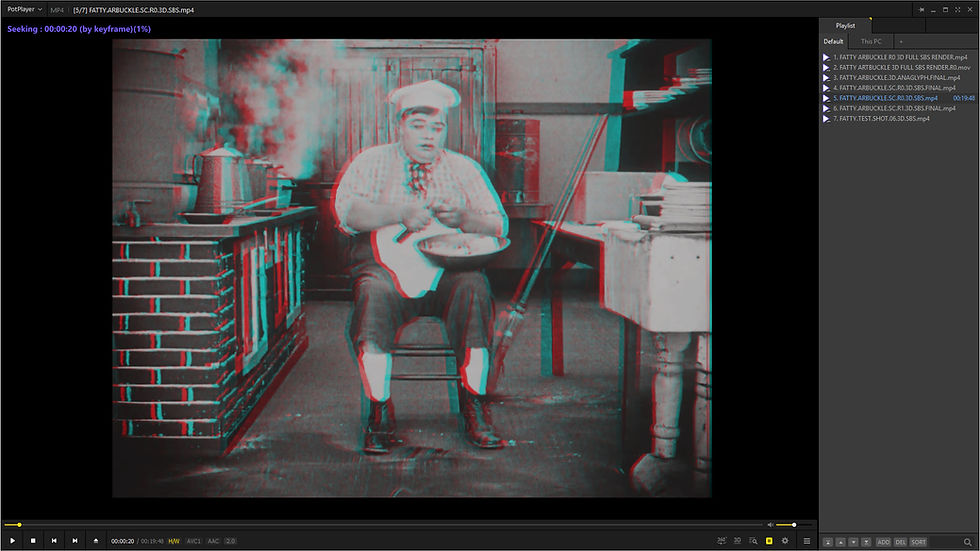
Before converting the entire feature, consider converting a short sequence (e.g., a 1 to 2 minute highlight reel) to evaluate quality, audience reaction, and cost.
Use the 3D Version as a Marketing Hook
Promote “3D limited screenings” as a premium event. Use social media, press, and partnerships (cinemas, festivals) to highlight the 3D edition as something special.
Plan Distribution Strategy
Identify which cinemas in your target markets support 3D. Negotiate with distributors to maximize the number of 3D screens, especially in territories likely to deliver a premium return.
Track Performance & Adapt
After release, closely monitor how 3D screenings perform vs 2D. Use this data to make decisions for future projects (e.g., whether more conversion or different formats make sense).
When Does 3D Conversion Make Financial Sense?

2D to 3D is a strategically smart investment when:
The film is genre-driven (sci-fi, action, horror, fantasy)
Theatrical release includes premium or event screenings
There is a niche collector audience for 3D discs or premium formats
The film has appeal in markets that favour 3D (China, South Korea, parts of Europe)
The conversion is done cost-effectively, not at studio-level budgets
3D is least effective when:
The film is dramatic, slow-paced, or dialogue-led
Theatrical support for 3D screenings is minimal
The conversion cost overruns into high six figures
Conclusion
For low-budget, theatrically released feature films, 2D-to-3D conversion offers a surprisingly cost-effective strategy to increase visibility, boost box office potential, and differentiate the film in a crowded market.
With technological advances, semi-automatic workflows, and more competitive conversion providers like EYEPOP-3D, filmmakers don’t need Hollywood blockbuster budgets to benefit from 3D. When planned and executed well, a 3D conversion can be an investment — not a gamble.
Cost-effective 2D-to-3D conversion can be a financially viable way for low-budget theatrical films to:
Increase box office income
Enter premium-priced screenings
Boost international sales
Enhance home video and collector appeal
Stand out in a crowded indie market
Expand promotional opportunities
The key is controlling the conversion cost. We can work with you to keep costs well-defined and appropriate for your budget. By controlling the scope of your 3D conversion the chances of profiting rise significantly: making high-quality but cost-efficient conversion companies invaluable for indie producers.
For further information do please take a look at our previous blog posts on this topic focussed on particular genre audiences, and do please get in touch:
INDIE SCI-FI - Using Primitive War as an example
INDIE HORROR - Using The Terrifier series of films as an example
Disclaimer: This blog post is an independent publication and is not affiliated with, endorsed by, or approved by any of the filmmakers, studios, or rights holders mentioned herein. All trademarks, film titles, and related materials remain the property of their respective owners.


Comments